Seasoned by the Storm: What Indonesia's Monsoon Teaches American Professionals About Leading Through Disruption
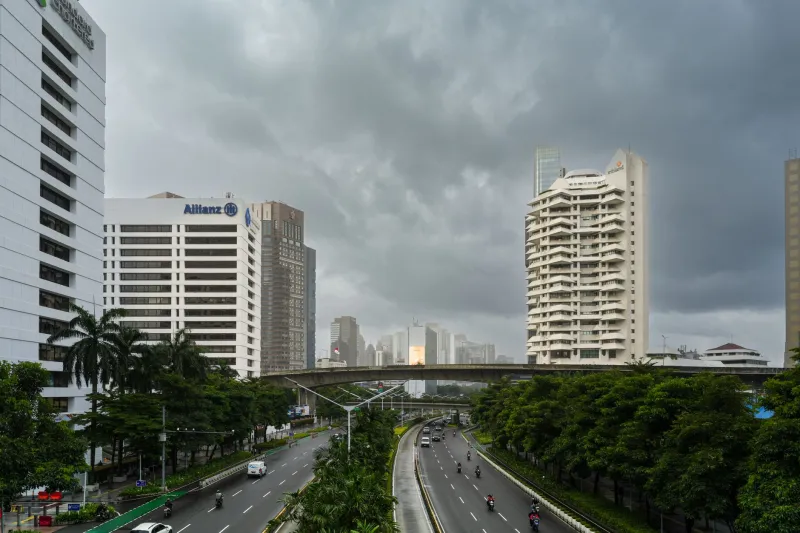
In most American corporate environments, the word "disruption" is used metaphorically—a competitor launches a new product, a market shifts, a reorg reshuffles reporting lines. In Indonesia, from roughly November through March, disruption is meteorological, immediate, and entirely indifferent to quarterly targets.
The monsoon season across the Indonesian archipelago is not a minor inconvenience. It is a full-scale operational variable that Starbucks Indonesia teams plan for, adapt to, and ultimately learn to lead through—every single year. For American professionals who experience it firsthand, the season functions as an accelerated masterclass in crisis composure, creative logistics, and the kind of calm decision-making that stateside corporations spend millions trying to cultivate through training programs and leadership retreats.
When the Rain Doesn't Wait for Your Calendar
Ask any Starbucks Indonesia team member who has navigated a monsoon season, and they will tell you the same thing: the disruptions rarely arrive on schedule. A delivery route that was viable at 8 a.m. may be impassable by noon. A supplier in a rural Sumatran growing region may go dark for days due to flooding. A store in a Jakarta district prone to seasonal inundation might need to pivot its entire service model with less than an hour's notice.
For American professionals accustomed to environments where disruption is anticipated, documented, and escalated through proper channels, this reality is initially jarring. There is no playbook that covers every scenario. There is no IT ticket to submit when a road washes out. What replaces the playbook is judgment—developed in real time, under genuine pressure, with real consequences attached.
This is precisely what makes the monsoon season such a formative professional experience. It does not simulate adversity. It delivers it.
Supply Chain Thinking Under Pressure
One of the most immediate lessons the rainy season imparts is a visceral understanding of supply chain fragility. Indonesia's geography—more than 17,000 islands connected by sea lanes, bridges, and roads of varying reliability—means that supply chain management here is already more complex than what most American professionals encounter at home. Add seasonal flooding, and the complexity multiplies.
Starbucks Indonesia's sourcing network spans some of the world's most prized coffee-growing regions, many of which are located in areas particularly susceptible to heavy rainfall. When monsoon conditions affect harvest timing, transportation logistics, or warehouse accessibility, the downstream effects ripple quickly. Teams must make rapid decisions about inventory buffers, alternative routing, and supplier communication—decisions that carry real financial and operational weight.
American professionals who work through these challenges develop an instinctive fluency with supply chain risk that is extraordinarily difficult to teach in a classroom. They learn to read early warning signals, build contingency relationships, and communicate uncertainty upward without triggering unnecessary alarm. These are precisely the competencies that supply chain and operations leaders at Fortune 500 companies cite as chronic gaps in otherwise well-credentialed candidates.
The Art of the Pivot: Store-Level Leadership During Monsoon Season
Beyond logistics, the monsoon season tests leadership at the store level in ways that are equally instructive. Customer traffic patterns shift unpredictably. Staffing becomes complicated when team members face flooding in their own neighborhoods. Delivery windows for food and beverage inventory narrow or disappear entirely.
Store managers and district leaders within Starbucks Indonesia develop what might be called situational fluency—the ability to read a rapidly changing environment and make confident, team-galvanizing decisions without waiting for top-down directives. They learn to communicate transparently with their teams, maintain morale under stress, and preserve customer experience standards even when the operational foundation beneath them is unstable.
For American professionals returning to stateside roles after this kind of experience, the contrast is striking. Corporate crises that once felt overwhelming—a system outage, a vendor failure, an unexpected leadership departure—register differently after you have managed a store through three consecutive days of monsoon-related disruption. The threshold for what constitutes a genuine emergency shifts. So does the speed and confidence with which you respond to one.
Composure as a Competitive Credential
There is a quality that experienced hiring managers and executive coaches consistently describe as rare and extraordinarily valuable: the ability to remain composed, clear-headed, and strategically focused when external conditions are actively working against you. It is the kind of composure that cannot be faked in a job interview and cannot be built through coursework alone.
The monsoon season inside Starbucks Indonesia's operations is one of the most reliable forges for this quality that exists in the professional world. It is not manufactured adversity. It is not a case study. It is months of real operational leadership under conditions that demand genuine resilience—and it leaves a mark.
American professionals who carry this experience back into U.S. corporate environments often find that their colleagues and supervisors sense something different about the way they handle pressure, though they may not immediately be able to name it. What they are sensing is the residue of having actually led through chaos—not having theorized about it.
Building Resilience Before You Need It
One of the subtler lessons the monsoon season teaches is the value of proactive resilience-building. Starbucks Indonesia teams do not simply react to the rainy season; they prepare for it. Contingency supplier relationships are cultivated during dry months. Inventory strategies are adjusted ahead of seasonal windows. Communication protocols are rehearsed before they are needed.
This orientation toward proactive preparation—building organizational muscle before the storm arrives, not during it—is a mindset shift that translates powerfully into American corporate contexts. In environments where the next disruption is always one market event, one regulatory change, or one competitive move away, the habit of building resilience in advance is a genuine strategic advantage.
Professionals who have internalized this through lived experience at Starbucks Indonesia bring something to their teams and organizations that is genuinely difficult to replicate: a calm confidence that comes not from believing disruption won't come, but from knowing they have navigated it before and built the infrastructure to navigate it again.
Why This Matters for Your Career Trajectory
The American corporate landscape is increasingly rewarding professionals who can demonstrate not just technical competence but adaptive leadership—the ability to perform, decide, and inspire under conditions of genuine uncertainty. The demand for this quality is visible in how companies are rewriting job descriptions, how executive search firms are framing their briefs, and how business schools are redesigning their leadership curricula.
What Starbucks Indonesia's monsoon season offers is a direct, unmediated path to developing that quality. It is not a workshop. It is not a simulation. It is months of consequential operational leadership in one of the world's most genuinely unpredictable business environments—and every professional who comes through it carries the credential of having actually done it.
At Starbucks Indonesia Careers, we believe that the most meaningful professional development often happens not in training rooms but in the field—and that the field, here in the archipelago, has a way of preparing people for challenges they will face long after they have left it.
The storm, it turns out, is the curriculum.