From Sumatra to the C-Suite: How Starbucks Indonesia's Sourcing Network Is Minting the Next Generation of Global Procurement Leaders
When Marcus Delgado left his mid-level procurement role at a Chicago-based consumer goods company to join Starbucks Indonesia's sourcing operations, his colleagues were skeptical. Why trade a predictable corporate ladder in the Midwest for what many perceived as a lateral move to Southeast Asia? Three years later, Delgado stepped into a Vice President of Global Sourcing position at a multinational food and beverage conglomerate — a role his hiring committee described as requiring exactly the kind of "irreplaceable field intelligence" he had accumulated in the Indonesian archipelago.
Delgado's trajectory is no longer exceptional. It is, increasingly, a blueprint.
The Knowledge Gap That Indonesia Fills
American corporations are facing a quiet crisis in their procurement divisions. Senior leaders who understand the technical mechanics of contracts and cost analysis are plentiful. What organizations cannot easily find are executives who genuinely understand how supply chains function at the origin level — in the farms, cooperatives, and regional trade networks where commodities are born before they ever appear on a purchase order.
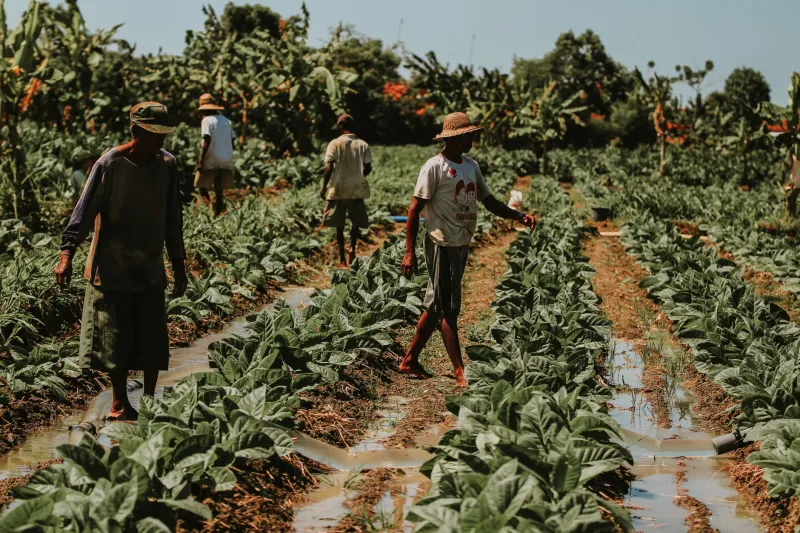
Indonesia sits at the center of one of the world's most complex agricultural sourcing environments. The country is home to some of the most distinguished coffee-growing regions on the planet, including Sumatra, Sulawesi, Flores, and Java, each with distinct processing traditions, smallholder farming structures, and logistical challenges. Starbucks Indonesia's sourcing teams work directly within this ecosystem, maintaining relationships with farming cooperatives, regional exporters, and sustainability certification bodies simultaneously.
For American professionals who participate in this work, the education is immediate and unrelenting. There are no simulated case studies. The negotiations are real, the relationships are consequential, and the ethical dimensions of procurement decisions carry weight that extends into farming communities and regional economies.
Ethics-Based Procurement as a Competitive Credential
One of the most significant competencies that Starbucks Indonesia's sourcing environment develops is what procurement specialists now refer to as ethics-based supplier management — the ability to structure agreements that satisfy organizational cost objectives while maintaining rigorous standards around fair compensation, environmental stewardship, and labor practices.
This is not a soft skill. Multinational corporations operating across global supply chains face intensifying regulatory scrutiny, including import compliance requirements tied to forced labor provisions, sustainability disclosure mandates, and ESG reporting obligations. Executives who have practical experience navigating these considerations at the ground level — not just interpreting them from a policy document — are extraordinarily valuable.
Jennifer Okafor, a former Starbucks Indonesia operations manager who transitioned into a Chief Procurement Officer role at a Seattle-based agricultural technology firm, describes the difference plainly: "In Indonesia, I was sitting across from cooperative leaders, understanding their cost structures, their seasonal pressures, their community obligations. When I returned to a corporate environment and had to evaluate supplier ethics programs, I wasn't reading abstractions. I had context that my peers simply didn't have."
Her hiring committee noted that her Indonesia experience was the decisive factor in her selection over candidates with more traditional procurement credentials.
Geopolitical Trade Intelligence: The Skill No MBA Teaches
Sourcing from Indonesia also means operating within a geopolitical and regulatory environment that demands a level of trade intelligence rarely developed in domestic procurement roles. Indonesia's agricultural export landscape is shaped by shifting government policies, bilateral trade agreements, currency volatility, and regional infrastructure constraints — all of which directly affect sourcing timelines, pricing structures, and supplier reliability.
American professionals who manage sourcing relationships within this environment develop an intuitive understanding of how macroeconomic forces translate into ground-level supply chain disruptions. They learn to build contingency frameworks not as theoretical exercises but as operational necessities.
This capability has become increasingly relevant as US corporations grapple with supply chain vulnerabilities exposed by recent global disruptions. Companies are actively searching for procurement leaders who have operated in high-complexity, low-predictability sourcing environments — and Indonesia qualifies on both counts.
David Liang, who spent four years with Starbucks Indonesia's regional procurement team before joining a New York-based luxury goods company as Director of Global Supply Chain, credits his Indonesian experience with giving him a framework for thinking about supplier risk that his peers lacked. "I had managed sourcing relationships through a volcanic disruption that closed a key regional port, through a regulatory shift that temporarily altered export certification requirements, and through a currency swing that required us to renegotiate terms mid-contract. Those experiences made every supply chain challenge I faced afterward feel manageable."
Direct-Trade Relationships and the Art of Negotiation
Perhaps the most transferable skill that Starbucks Indonesia's sourcing environment cultivates is a sophisticated approach to negotiation that goes far beyond price leverage. Direct-trade relationships — the kind that Starbucks Indonesia maintains with farming cooperatives and regional producers — require professionals to negotiate outcomes that serve multiple stakeholders across significant cultural, linguistic, and economic divides.
American procurement specialists who develop this capability return to corporate environments with a negotiation fluency that their domestically trained counterparts rarely possess. They understand how to build trust across cultural contexts, how to structure agreements that account for the long-term interests of supplier communities, and how to maintain productive relationships even when commercial pressures create friction.
These are precisely the skills that organizations need as they expand into emerging markets and navigate supplier relationships in regions where purely transactional approaches consistently fail.
What This Means for American Professionals Considering the Leap
For US procurement and supply chain professionals evaluating their career trajectories, the data emerging from Starbucks Indonesia's alumni network is difficult to ignore. Professionals who have completed meaningful sourcing assignments in Indonesia are consistently landing senior roles at accelerated timelines compared to peers who remained within conventional corporate procurement tracks.
The reasons are structural. In an environment where procurement leadership increasingly requires global fluency, cultural intelligence, and practical experience with ethics-based sourcing, Indonesian field experience provides a credential that is simultaneously rare and directly applicable to the challenges that corporations are trying to solve.
Starbucks Indonesia's sourcing operations offer American professionals access to this environment — not as observers, but as active participants in one of the most sophisticated direct-trade networks in the global coffee industry. The relationships built, the decisions made, and the complexity navigated in those roles translate directly into executive-level competencies that define the next generation of global procurement leadership.
For professionals willing to invest the time and embrace the challenge, Indonesia is not a detour. It is the fastest route to the top of a field that the world's largest companies are struggling to staff with qualified leaders.
Interested in exploring procurement and sourcing career opportunities with Starbucks Indonesia? Visit our Career Opportunities section to review current openings and learn more about how a role in Indonesia's coffee sourcing ecosystem can position you for global leadership.