Beyond the American Apron: Why US Coffee Professionals Are Betting Their Careers on Indonesia—and Winning
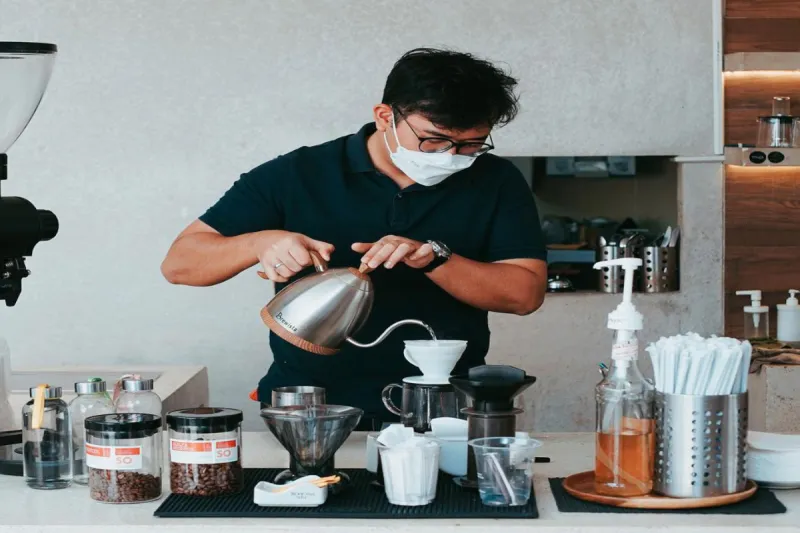
Photo: American expat barista working in modern coffee shop Indonesia Jakarta, via www.indonesia.travel
Sarah Mendez spent six years working her way up through Starbucks stores in the Pacific Northwest. She was a shift supervisor by year two, an assistant store manager by year four, and by year six she was good at her job—very good, in fact—but she was also restless. Promotions in her district were slow, the market felt saturated, and she had begun to wonder whether the ceiling above her was lower than she had originally assumed. Then a colleague mentioned that Starbucks Indonesia was actively recruiting experienced American store managers for leadership roles in its rapidly expanding Jakarta market. Eighteen months later, Sarah is a district manager overseeing seven locations in one of the world's most dynamic cities. "I honestly didn't think I was ready," she told us over a video call, the Jakarta skyline visible behind her. "But Indonesia made me ready."
Sarah's story is not unique. It is, increasingly, a pattern.
A Market That Rewards Experience Differently
The United States remains one of the most competitive environments in the world for coffee industry professionals. The specialty coffee sector has matured significantly over the past decade, and while that maturity has elevated standards across the board, it has also created a crowded field where advancement can feel agonizingly incremental. Senior barista roles, training positions, and store management opportunities are fiercely contested in major American markets, and the gap between ambition and opportunity is real for many talented professionals.
Indonesia presents a structurally different landscape. The country's middle class is expanding rapidly, coffee consumption among younger urban Indonesians is accelerating, and Starbucks Indonesia is in an active growth phase—opening new stores, developing new market segments, and building out its management infrastructure at a pace that simply does not exist in a saturated domestic US market. For experienced American professionals, this means that qualifications which might earn a modest promotion at home can translate into genuinely senior roles in Indonesia. The demand for professionals who combine Starbucks operational fluency with leadership experience is, by multiple accounts, outpacing local supply.
What Expats Actually Say About the Move
We spoke with several US-born Starbucks professionals currently working in Indonesia, and a few themes emerged consistently across their accounts.
The first is the pace of responsibility. James Kowalski, a former barista trainer from Chicago who now serves as a regional training manager in Bali, described being given ownership of a company-wide training initiative within his first year in-country—something he doubted would have happened in a comparable US role for several years more. "There's a willingness here to trust people with big projects early," he said. "It's exhilarating, honestly."
The second theme is cultural richness. Indonesia is not a monolithic country—it is an archipelago of more than 17,000 islands, home to hundreds of distinct ethnic groups and languages, and navigating that diversity in a professional context is, by all accounts, one of the most genuinely educational experiences these expats have had. Marcus Liu, a store manager from San Francisco now based in Yogyakarta, described his first year as "a masterclass in humility and adaptability." He added that the interpersonal skills he developed in that environment have made him a measurably better leader.
The third theme—and perhaps the most surprising to Americans considering the move—is work-life balance. While Indonesia's major cities are bustling and professionally demanding, many expats report a quality of life that compares favorably to what they experienced in high-cost American urban markets. Housing is generally more affordable relative to compensation packages, the food culture is extraordinary, and the natural environment—beaches, volcanoes, rice terraces—offers a quality of weekend and vacation experience that several interviewees described as genuinely transformative.
The Practical Side: Visas, Relocation, and What Starbucks Indonesia Provides
For many American professionals, the logistical questions surrounding an international relocation feel like the highest barrier to entry. The good news is that Starbucks Indonesia has developed structured support frameworks for international hires that meaningfully reduce that friction.
Work authorization for foreign nationals in Indonesia is managed through a KITAS (Kartu Izin Tinggal Terbatas), or temporary stay permit, which is tied to sponsored employment. Starbucks Indonesia coordinates this process for international hires, working with legal and HR partners to manage the documentation requirements on the employee's behalf. While the process requires patience—Indonesian bureaucratic timelines can be unpredictable—most expat hires describe the company's support as genuinely helpful in navigating it.
Relocation packages for senior hires typically include assistance with initial housing, flights, and in some cases, language training in Bahasa Indonesia. The extent of these packages varies by role and seniority level, so it is worth discussing specifics during the offer negotiation phase. Candidates who ask detailed questions about relocation support during the interview process are generally viewed favorably—it signals seriousness about the commitment.
For professionals not yet ready to commit to a full relocation, it is worth noting that some roles—particularly in training, quality assurance, and brand development—can begin with a project-based or short-term assignment structure, allowing candidates to experience working in Indonesia before making a longer-term decision.
Why Indonesia, Why Now
The timing of this trend is not accidental. Indonesia is in the midst of a demographic and economic moment that makes it one of the most compelling emerging markets in the world. With a population of over 270 million people, a median age in the late twenties, and a growing urban professional class with disposable income and aspirational consumer habits, the country represents a genuinely significant opportunity for brands like Starbucks.
For American coffee professionals, this moment is worth taking seriously. The career trajectories being built by early movers—professionals like Sarah, James, and Marcus—are already diverging meaningfully from their domestic counterparts. The experience of leading teams across cultural contexts, managing operations in a high-growth market, and developing professional networks across Southeast Asia is the kind of résumé differentiation that opens doors for decades.
Is the Leap Right for You?
Not every American coffee professional is a candidate for this kind of move, and it would be disingenuous to suggest otherwise. The adjustment is real. The distance from family and friends is real. The bureaucratic unpredictability of operating in a country with a very different administrative culture is real. Anyone considering this path should go in with clear eyes and honest self-assessment.
But for professionals who are genuinely curious about the world, professionally hungry, and willing to embrace discomfort as a condition of growth, Starbucks Indonesia represents something that is genuinely hard to find in today's domestic coffee market: a frontier.
The green apron is the same. The opportunity behind it is anything but.
Thinking about making the move? Explore international career opportunities with Starbucks Indonesia at career-sbuxindonesia.com and take the first step toward brewing your future in Southeast Asia.
