When the Farmer Speaks, the Business Listens: The Radical Stakeholder Skill Starbucks Indonesia Is Building—One Coffee Conversation at a Time
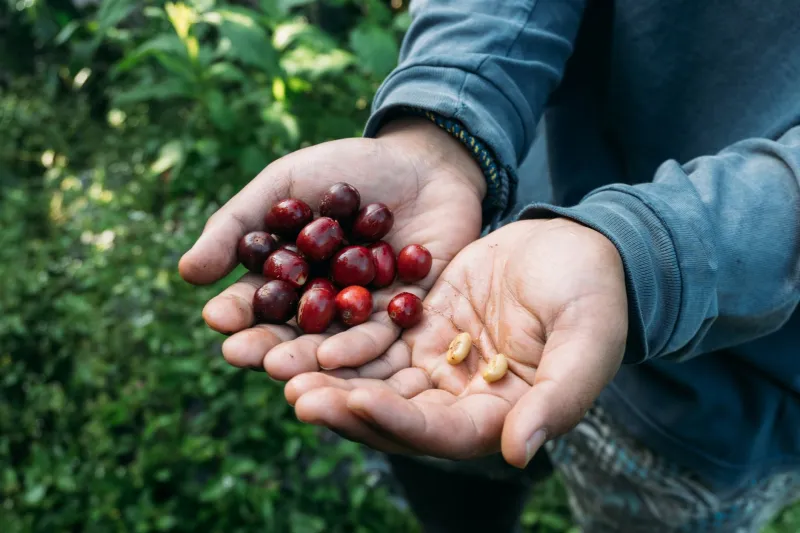
Marcus Holloway spent eleven years in corporate procurement before he took a sourcing role with Starbucks Indonesia. He had negotiated multimillion-dollar contracts, managed supplier scorecards, and sat through more vendor review meetings than he could count. He thought he understood stakeholder management. Then he visited a smallholder coffee farm in the Toraja highlands, and he realized he had been confusing transactional fluency with genuine listening.
"The farmer I was meeting with had been growing coffee for thirty years," Holloway recalls. "He didn't want to talk about price points. He wanted to tell me what the rains had been doing to his crop for the past decade. And I almost missed it—because I was waiting for the conversation to get to the agenda items I'd prepared."
That moment of near-miss became, in Holloway's account, the most formative professional experience of his career. And it is an experience that Starbucks Indonesia's sourcing model creates, repeatedly and by design, for the American professionals who work within it.
The Sourcing Model That Demands Real Dialogue
Starbucks Indonesia's relationship with Indonesian coffee is not a vendor management exercise. The company sources from a network of smallholder farmers—individual growers who typically cultivate just a few hectares of land—whose livelihoods are directly shaped by the terms of their relationship with buyers like Starbucks. Managing that relationship well requires something that supply chain coursework rarely emphasizes: the willingness to listen before you transact.
Smallholder farmers operate in an information environment that is radically different from the dashboard-driven world of corporate procurement. Their knowledge is experiential, seasonal, and deeply local. They understand soil conditions, microclimate variations, and the generational patterns of their land in ways that no external data source can replicate. For Starbucks Indonesia's sourcing professionals, accessing that knowledge—and acting on it intelligently—is not a soft skill. It is a core operational competency.
The professionals who develop this competency are not simply becoming better listeners in the interpersonal sense. They are building a framework for stakeholder engagement that prioritizes trust accumulation over transactional efficiency. And that framework, it turns out, transfers with remarkable precision to the high-stakes stakeholder environments of American corporate life.
The Anti-MBA Competency
Most formal leadership development programs treat stakeholder management as a subset of communication skills: learn to read the room, tailor your message, manage up effectively. These are useful capabilities. They are also, in the experience of professionals who have done serious sourcing work in Indonesia, a somewhat thin preparation for the moments that actually define careers.
The competency that Starbucks Indonesia's farmer relationships build is something different—closer to what organizational psychologists call epistemic humility, the practiced recognition that the person across the table may hold information you need more than you need the outcome you came in to negotiate. This is not a natural posture for high-achieving American professionals, who are typically rewarded for having answers, not for the quality of their questions.
The Indonesian sourcing environment reconditions that instinct. When a farmer tells you that the harvest will be lighter than projected because of something she observed in the flowering patterns three months ago, and you have learned to trust that observation over your own forecast model, you have developed a form of stakeholder intelligence that is genuinely rare in corporate settings. You have learned to treat the person in front of you as a primary source rather than a variable to be managed.
Trust Capital and Why It Compounds
Sarah Nguyen, an American supply chain professional who spent four years working within Starbucks Indonesia's sourcing network before returning to a senior role at a consumer goods company in Chicago, describes the shift in terms of what she calls trust capital.
"In a typical corporate environment, trust is something you build over time through consistent performance," she explains. "In the Indonesian sourcing context, you build it through consistent presence and consistent listening. Farmers remember who showed up, who asked real questions, and who followed through on what they said they would do. That memory is long, and the relationships it produces are extraordinarily durable."
Nguyen brought that orientation back to her American role—and found that it translated immediately. "I started treating internal stakeholders the way I had learned to treat farmers: showing up before I needed something, asking questions before I offered solutions, following through on small commitments before I asked for large ones. The dynamics shifted in ways I hadn't expected."
The trust capital model is, in essence, a long-game approach to stakeholder management—one that produces disproportionate returns in high-friction environments where short-term transactional thinking tends to generate resistance. For American professionals navigating the complex internal politics of large organizations, it is a framework with immediate applicability.
What the Farmers Are Actually Teaching
Beyond the interpersonal dynamics, Starbucks Indonesia's farmer relationships are teaching sourcing professionals something about negotiation that business school case studies rarely capture: the distinction between a deal and a relationship. In the smallholder context, these are not the same thing. A deal is a single transaction with defined terms. A relationship is a multi-season, multi-variable commitment that requires ongoing calibration and mutual accommodation.
Professionals who have managed sourcing relationships across multiple growing cycles in Indonesia develop a negotiation instinct that is less adversarial and more adaptive than the frameworks typically taught in American MBA programs. They learn to think in terms of shared exposure rather than positional advantage—to identify the risks and uncertainties that both parties face, and to structure agreements that distribute those uncertainties fairly rather than simply shifting them to the weaker party.
In corporate America, that instinct is a significant differentiator. The executives who can build supplier relationships that survive disruption—who have partners that call them first when something goes wrong, rather than calling their lawyers—are the executives who have learned something that the Indonesian highlands teach particularly well.
The Credential That Travels Home
For American professionals considering a career move into Starbucks Indonesia's sourcing and supply chain functions, the farmer relationship dimension of the work is not a peripheral feature—it is the central developmental opportunity. The conversations that happen in the coffee fields of Sumatra and Sulawesi are not background to the real work. They are the real work, and they produce a professional capability that is increasingly difficult to find and increasingly valuable to the organizations that need it.
If your career has made you good at managing stakeholders but not yet great at genuinely hearing them, Starbucks Indonesia's sourcing environment offers a direct path to closing that gap. The farmers will teach you. You only need to be willing to listen.