Beyond the Phrase Book: How Deep Cultural Fluency Inside Starbucks Indonesia Becomes a Rare Edge in Global Business

There is a version of international business experience that looks impressive on paper but means very little in practice. A two-week leadership retreat in Singapore. A quarterly review trip to Tokyo. A handful of Zoom calls with colleagues in Jakarta. American professionals accumulate these credentials routinely, and hiring managers at global companies have learned to read past them.
Then there is the other kind—the kind that comes from showing up, month after month, inside an organization that operates according to rhythms, values, and relational codes that differ fundamentally from anything you encountered in an American office. That is the experience Starbucks Indonesia offers, and the professionals who have lived it will tell you it changes how they work, how they listen, and how they lead—permanently.
What Cultural Fluency Actually Means
Fluency, in this context, has almost nothing to do with language. A handful of Bahasa Indonesia phrases will smooth your first week in Jakarta, but they will not help you understand why a business proposal that seemed enthusiastically received in a meeting never moves forward. They will not explain why a senior colleague defers a decision you expected to be made on the spot, or why building a relationship with a regional partner requires three dinners before a single contract term is discussed.
Those dynamics are rooted in something deeper: a set of cultural values around hierarchy, collective harmony, indirect communication, and long-term relationship investment that shape virtually every professional interaction in Indonesia. Learning to read them—and to operate effectively within them—is the real education that Starbucks Indonesia provides.
"I thought I understood cross-cultural communication because I'd traveled," says one American professional who joined Starbucks Indonesia in a regional operations role after nearly a decade in consumer goods. "What I didn't understand was the difference between observing a culture and being accountable inside one. When your results depend on relationships you have to build the Indonesian way, you learn very quickly."
The Specific Skills That Transfer
American professionals who have worked substantively within Starbucks Indonesia's Indonesia-based teams consistently identify a cluster of competencies that they did not possess before—and that proved immediately valuable when they transitioned to other global roles.
Reading the room at a different frequency. Indonesian professional culture places significant weight on preserving group harmony, which means disagreement, hesitation, and concern are rarely expressed directly. Learning to interpret what is not said—and to create conditions where honest feedback can surface without causing anyone to lose face—is a skill that transfers directly to any organization operating across Asia.
Patience as a strategic tool. American business culture tends to reward speed: fast decisions, quick pivots, rapid execution. Indonesian relationship-building operates on a longer timeline, and professionals who internalize that rhythm develop a capacity for strategic patience that becomes genuinely rare. Several Starbucks Indonesia alumni have noted that this quality distinguished them during negotiations with Asian partners at subsequent employers.
Hierarchy navigation that actually works. Understanding how deference, seniority, and decision-making authority function in Indonesian organizational culture requires more than reading a briefing document. It requires experience. Professionals who have managed upward and laterally within that system bring a nuanced understanding of hierarchical dynamics that proves applicable across many Asian markets—and, increasingly, within the Asia-Pacific divisions of American multinationals.
Relationship-first deal-making. In many American business contexts, relationships are built after a deal is signed. In Indonesia, they are a prerequisite. Professionals who have internalized this sequence—and who know how to invest in relationships before there is an obvious transactional reason to do so—arrive at multinational corporations and VC firms with a capability that is difficult to teach and expensive to learn on the job.
What Employers Are Actually Looking For
The demand for this kind of cultural fluency is not abstract. It is being driven by concrete business pressures.
Southeast Asia represents one of the fastest-growing consumer markets in the world, and Indonesia—with a population exceeding 270 million—is its largest economy. American companies that once treated the region as a peripheral opportunity are now designating it a strategic priority. That shift has created a genuine talent gap: organizations need people who understand how to build and sustain business relationships in Indonesia specifically, not just people who have read a market report about it.
Venture capital firms with Southeast Asia portfolios are actively seeking associates and partners who can evaluate founders and management teams through a culturally informed lens. Technology companies expanding their Indonesia operations want product and partnership leads who understand how Indonesian consumers and business partners make decisions. Multinational consumer brands need regional managers who can negotiate with local distributors and government stakeholders without inadvertently causing offense.
In each of these contexts, the professional who developed genuine cultural fluency inside Starbucks Indonesia arrives with a credential that is both rare and immediately applicable.
The Starbucks Indonesia Difference
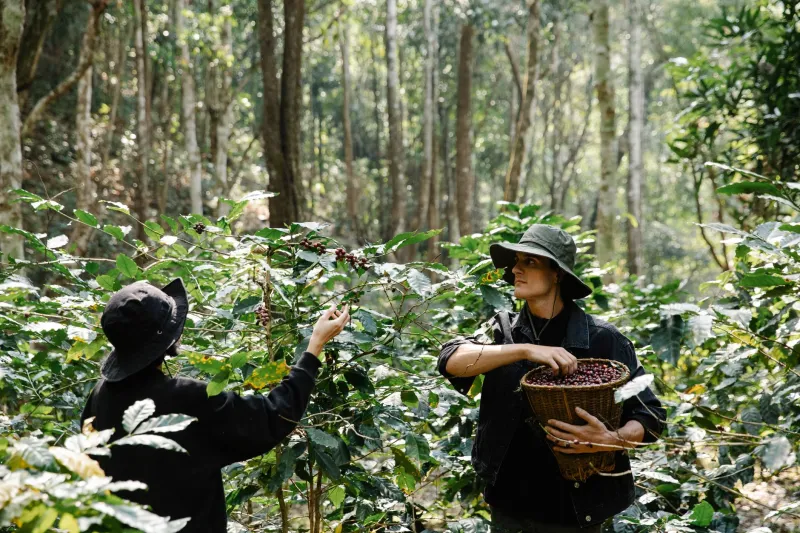
What makes the Starbucks Indonesia environment particularly effective as a cultural learning ground is the nature of the organization itself. This is not an American company operating a satellite office staffed primarily by expatriates. It is a deeply embedded local enterprise—one with sourcing relationships that extend into farming communities in Sumatra and Sulawesi, retail operations spread across a vast and diverse archipelago, and a workforce that reflects the full complexity of Indonesian professional culture.
American professionals who join Starbucks Indonesia in meaningful roles are not observing that complexity from a comfortable distance. They are working within it, being evaluated by it, and held accountable to results that depend on navigating it successfully. That accountability is precisely what accelerates the learning.
"You can't fake your way through it," notes one American who transitioned from a Starbucks Indonesia supply chain role to a Southeast Asia-focused position at a global logistics firm. "If you're not genuinely curious about why things work the way they do here, you'll struggle. But if you lean into it, you come out the other side with a kind of understanding that you simply cannot get any other way."
Building a Career That Travels
For American professionals considering what a career within Starbucks Indonesia might offer, the cultural dimension deserves as much weight as the functional one. Yes, the supply chain exposure is exceptional. Yes, the leadership development opportunities are real. But the cultural fluency—the ability to operate with genuine effectiveness inside one of Asia's most dynamic and complex markets—may ultimately be the most durable asset.
Global business is not becoming less complicated. The organizations best positioned to succeed across borders will be led by people who understand not just markets, but the human dynamics that shape how those markets actually function. Starbucks Indonesia is one of the few environments where Americans can develop that understanding from the inside—and carry it forward into whatever comes next.
The professionals who have done it will tell you: the phrase book was never the point. The point was learning to think differently. And that, it turns out, is worth more than almost anything else you can bring to a global career.